


I am Suraj Singh an entrepreneur innovator, and visionary with a passion for technology, business, and creating meaningful connections.
Loading
I am Suraj Singh an entrepreneur innovator, and visionary with a passion for technology, business, and creating meaningful connections.
The Silent Shift: How Fake Narratives on Secondary Social Media Platforms Threaten Public Trust and National Stability
In the modern digital world, information travels faster than ever before. News, opinions, and narratives spread across borders within minutes, shaping public perception in real time. Social media platforms have become the primary arena where ideas compete, debates unfold, and public opinion forms.
However, as people have become more cautious and fact-checking has improved on mainstream platforms, a new and quieter battleground has emerged. Disinformation campaigns are increasingly moving away from heavily scrutinized social networks and toward lesser-used or secondary platforms, where misleading narratives can spread with far less resistance.
This shift represents more than just a communication trend—it poses a serious challenge to public trust, social harmony, and even national security.
A few years ago, misleading or manipulated narratives spread easily on major social media platforms. Viral posts, edited videos, and unverified claims circulated widely without scrutiny. Over time, however, users became more skeptical. Media literacy improved, fact-checking organizations gained visibility, and platforms introduced moderation policies.
As a result, spreading false information on mainstream platforms became harder. Users began questioning sources. Screenshots were verified. Claims were cross-checked within minutes. Multiple viewpoints became accessible. But disinformation campaigns did not stop—they adapted. Instead of fighting scrutiny, they moved to places where scrutiny is lower.
Today, many misleading narratives begin not on mainstream platforms but on secondary or niche platforms.
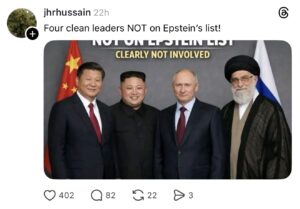
These include:
Because engagement is lower, narratives often go unchallenged. Claims remain unchecked. Misleading posts are shared within closed or semi-closed communities, slowly building momentum.
Once a narrative gains enough repetition and acceptance in these smaller spaces, it is later introduced into mainstream platforms as if it were already established fact. By then, the story appears familiar, and familiarity often creates false credibility. This is how misinformation slowly becomes accepted as truth.
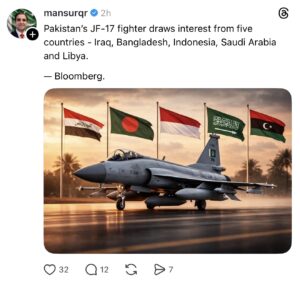
One common tactic used in misleading narratives is selective presentation of facts. For example, imagine a situation where global economic conditions are affecting currencies worldwide. If a narrative focuses only on one country’s currency decline while ignoring global trends, it creates a misleading impression.
This technique, often called hasty generalization, draws broad conclusions from incomplete or selective data. Audiences are shown only the part of reality that supports a specific agenda, while the larger context is hidden. Without context, perception changes. And perception, over time, influences public opinion.
In multiple countries over the past decade, online narratives have played a role in shaping public unrest, protests, and political tensions. In situations where emotions are already high, misinformation can intensify confusion and division.
Secondary platforms often become early staging grounds where selective or misleading claims begin circulating. Once these narratives gain traction, they spill into mainstream discussions, sometimes contributing to social polarization or mistrust.

It is important to note that protests and political movements arise from complex social, economic, and political factors. However, digital misinformation can amplify misunderstandings, inflame tensions, and distort public discourse when people rely on incomplete or misleading information.
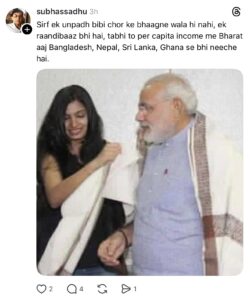
A recent example illustrates how context can be lost when narratives are shaped selectively.
Public discussions emerged after documents related to Jeffrey Epstein became widely discussed online. Among many global public figures, references to various leaders and personalities appeared in conversations or documentation.
In digital discussions, some users interpreted mere mentions of names as evidence of wrongdoing. However, being mentioned in a conversation, document, or third-party account does not automatically imply involvement or personal association.
Names of public figures frequently appear in discussions, diplomatic conversations, business contexts, or speculative commentary without implying direct contact or misconduct.
In many cases, statements or references are taken out of context, simplified, or exaggerated when circulated on social media. Once such simplified narratives spread, correcting them becomes difficult because the emotional reaction has already taken hold.
This illustrates how incomplete information, once widely circulated, can lead to misinterpretation and reputational damage—even when full context tells a different story.
Psychologically, humans tend to believe information that they encounter repeatedly. This is known as the “illusory truth effect.”
If people see the same claim across multiple platforms—even if those platforms are smaller or less credible—they may begin to assume it is true simply because it feels familiar.
Disinformation campaigns exploit this psychological tendency:
Over time, what began as speculation becomes accepted discussion.
Modern conflicts are not fought only with weapons. They are also fought with information.
When citizens lose trust in institutions, when communities become polarized based on misinformation, and when people cannot distinguish fact from manipulation, societies become vulnerable.
National stability depends not only on economic or military strength but also on public trust and informed decision-making.
Disinformation campaigns aim to:
When misinformation spreads unchecked, it weakens public discourse and decision-making.
The solution does not lie solely with governments or technology companies. Ordinary users also play a crucial role.
Every individual can help prevent the spread of misinformation by:
Awareness is the first defense.
Disinformation today rarely appears suddenly in mainstream spaces. It grows quietly in overlooked corners of the internet before emerging into public discourse.
The challenge is no longer just identifying fake news—it is recognizing how narratives are built, repeated, and normalized over time.
As digital citizens, the responsibility is shared. By questioning sources, demanding context, and refusing to share unverified claims, individuals can help prevent manipulation.
Information shapes perception. Perception shapes decisions. And decisions shape the future.
In an age where narratives can influence nations, vigilance is no longer optional—it is essential.

0 Comments